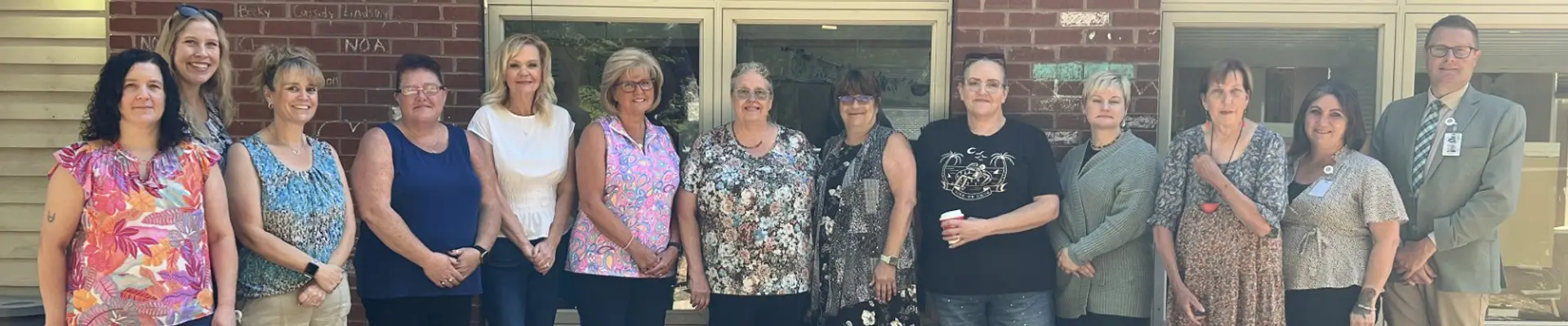
For generations, community action has been part of life across northern and Downeast Maine. In fuel deliveries on cold mornings and Head Start classrooms, in town offices and church basements, people here built something worth protecting: a network of neighbors helping neighbors, carried by decades of dedication from staff, volunteers and board members who poured their hearts into it. Much of that legacy lives on in the very people who carry it forward today.
Avec is what happens when those legacies come together. Rather than continue as separate organizations, each stretched thin by the same rising costs and the same hard math, the people of these regions chose to build something new, together. Not one folded into another, but a single entity shaped by both, reaching across Aroostook, Washington and Hancock counties, a third of our state.
We believe this is what the moment asks of us. The challenges facing rural Maine are too large, and its resources too precious, for any of us to meet alone. Coming together lets us put more where it belongs, in the hands of the families we serve, and less into doing the same work twice. We hope it stands as an example, too, of what becomes possible when organizations choose to join hands rather than go it alone. It’s the clearest expression we know of a belief we hold deeply: we’re stronger together.
A new organization like this needed a name that belonged to all of it. Not to one county or one chapter, but to the whole region and everyone in it. So we went looking for a word about how we work, not where. We found it in Avec, French for with. It says the truest thing about us in a single word.
We work with people, not for them. We stand with families as they set their own course. We stay with communities through every season of change.
But Avec is more than a description of our work. It’s a word this region has been speaking, in one form or another, for four hundred years.
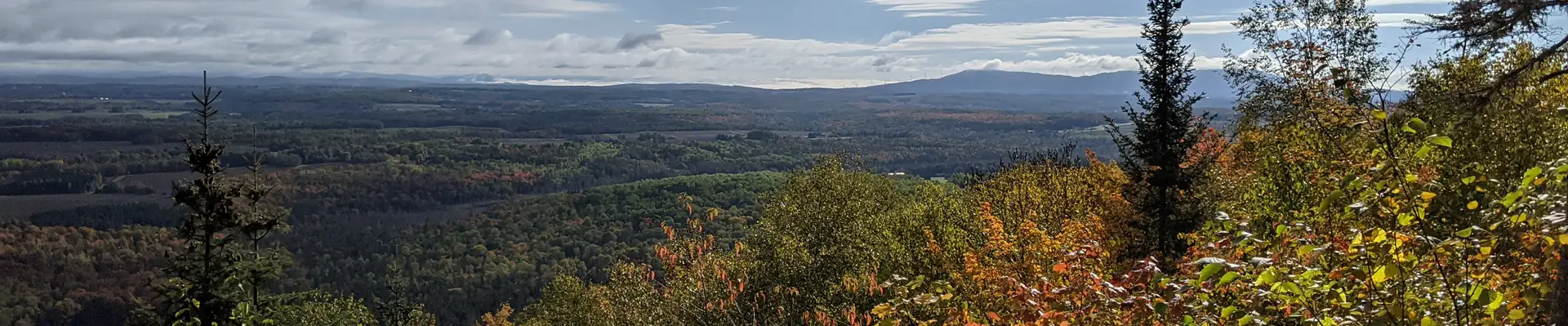
French has echoed across this coast and countryside since the earliest days of European presence in North America, and its story touches all three of the counties we now call home.
It begins on the water near Calais. In 1604, years before the Pilgrims reached Plymouth, a French expedition built one of the continent’s first European settlements on St. Croix Island, in what is now Washington County. The winter that followed was merciless, and many did not survive it, but the Passamaquoddy people, who had lived along that river for generations, helped the newcomers endure. That small island, on the water that still carries the name St. Croix, is where the story of Acadia begins.
That same expedition sailed the coast of what
is now Hancock County and named its great island l’Isle des Monts Déserts, the island of bare mountains. The name endures today as Mount Desert Island, and the French name for this whole corner of the New World endured with it: Acadie, Acadia. A French mission rose on those shores within the decade, among the earliest in the Northeast.
And in the St. John Valley to the north, the Acadian story took its deepest root of all. In the 1750s, British forces drove the Acadian people from their homes and scattered them across the continent, an uprooting so severe it is remembered as le Grand Dérangement, the Great Upheaval. Many lost everything. Some found their way to the upper St. John River, settled on both banks and began again. What they rebuilt has lasted for generations: the language, the food, the music, the faith, a way of belonging that refused to be erased.
You can still hear all of it in the names stitched across the map, in villages like Lamoine on the coast and Presque Isle in The County. From the shores of Washington to the coast of Hancock
to the rivers of Aroostook, French heritage
runs through every part of the region we serve. Choosing a French word honors that shared inheritance and the resilience of the people who carried it. Avec belongs to this whole region, because the French story does too.
Long before county lines, long before roads, this land was home to the Wabanaki Nations: the Passamaquoddy, Penobscot, Maliseet, Mi’kmaq and Abenaki peoples who have lived in relationship with these rivers, forests and coasts for thousands of years. That relationship has not ended. The Mi’kmaq and Maliseet in Aroostook and the Passamaquoddy Downeast are our neighbors today, part of the living fabric of this region and not a chapter that closed. We name this history because the with at the heart of our work asks us to. You cannot live alongside people honestly while overlooking the ones who were here first.
Over time, more threads were added to the
quilt. Swedish farmers brought new traditions. Scots-Irish families cultivated a robust forest products industry. Hispanic and Latin American communities strengthened the workforce and enriched local culture. And others became part of the vibrant patchwork that defines our region. Each square is distinct, but all are sewn into the same fabric.
That’s the story of this place. Not one culture replacing another, but many cultures living with each other, shaping a shared home. A French word for a region this woven together isn’t a claim that one heritage matters most. It’s a small, honest nod to how long people here have been finding ways to belong to the same place.
For generations, community action has been part of life across northern and Downeast Maine. In fuel deliveries on cold mornings and Head Start classrooms, in town offices and church basements, people here built something worth protecting: a network of neighbors helping neighbors, carried by decades of dedication from staff, volunteers and board members who poured their hearts into it. Much of that legacy lives on in the very people who carry it forward today.
Avec is what happens when those legacies come together. Rather than continue as separate organizations, each stretched thin by the same rising costs and the same hard math, the people of these regions chose to build something new, together. Not one folded into another, but a single entity shaped by both, reaching across Aroostook, Washington and Hancock counties, a third of our state.
A new organization like this needed a name that belonged to all of it. Not to one county or one chapter, but to the whole region and everyone in it. So we went looking for a word about how we work, not where. We found it in Avec, French for with. It says the truest thing about us in a single word.
French has echoed across this coast and countryside since the earliest days of European presence in North America, and its story touches all three of the counties we now call home.
It begins on the water near Calais. In 1604, years before the Pilgrims reached Plymouth, a French expedition built one of the continent’s first European settlements on St. Croix Island, in what is now Washington County. The winter that followed was merciless, and many did not survive it, but the Passamaquoddy people, who had lived along that river for generations, helped the newcomers endure. That small island, on the water that still carries the name St. Croix, is where the story of Acadia begins.
That same expedition sailed the coast of what is now Hancock County and named its great island l’Isle des Monts Déserts, the island of bare mountains. The name endures today as Mount Desert Island, and the French name for this whole corner of the New World endured with it: Acadie, Acadia. A French mission rose on those shores within the decade, among the earliest in the Northeast.
And in the St. John Valley to the north, the Acadian story took its deepest root of all. In the 1750s, British forces drove the Acadian people from their homes and scattered them across the continent, an uprooting so severe it is remembered as le Grand Dérangement, the Great Upheaval. Many lost everything. Some found their way to the upper St. John River, settled on both banks and began again. What they rebuilt has lasted for generations: the language, the food, the music, the faith, a way of belonging that refused to be erased.
You can still hear all of it in the names stitched across the map, in villages like Lamoine on the coast and Presque Isle in The County. From the shores of Washington to the coast of Hancock to the rivers of Aroostook, French heritage runs through every part of the region we serve. Choosing a French word honors that shared inheritance and the resilience of the people who carried it. Avec belongs to this whole region, because the French story does too.
Long before county lines, long before roads, this land was home to the Wabanaki Nations: the Passamaquoddy, Penobscot, Maliseet, Mi’kmaq and Abenaki peoples who have lived in relationship with these rivers, forests and coasts for thousands of years. That relationship has not ended. The Mi’kmaq and Maliseet in Aroostook and the Passamaquoddy Downeast are our neighbors today, part of the living fabric of this region and not a chapter that closed. We name this history because the with at the heart of our work asks us to. You cannot live alongside people honestly while overlooking the ones who were here first.
Over time, more threads were added to the quilt. Swedish farmers brought new traditions. Scots-Irish families cultivated a robust forest products industry. Hispanic and Latin American communities strengthened the workforce and enriched local culture. And others became part of the vibrant patchwork that defines our region. Each square is distinct, but all are sewn into the same fabric.
That’s the story of this place. Not one culture replacing another, but many cultures living with each other, shaping a shared home. A French word for a region this woven together isn’t a claim that one heritage matters most. It’s a small, honest nod to how long people here have been finding ways to belong to the same place.
No, programs and services aren’t changing because of the new name.
No, this doesn’t affect who is eligible for programs or services.
No, customers will still apply for programs or services exactly as they have in the past.
No, customers will still be able to come to us for all of the programs and services that they have been receiving.
No, office locations and phone numbers haven’t changed. One thing that is different are email addresses and the website address! But don’t worry we will still have access to our old email addresses during the transition period!
To reflect our larger footprint, now serving both Northern and Downeast Maine.
Yes! Services in Aroostook will continue as they have for over 50 years. The only thing that has changed is the Name and our service area, we now also serve Washington and Hancock Counties.
Only non-program dollars were used to support the work around the new name and brand.
Staff, community members, partners, board members, customers! Many people across all three counties were involved in the process in a variety of ways, like focus groups, surveys and meetings!
Share the incorrect information with Rebecca Damon, Avec Communications and Community Outreach Manager at 207-554-4113 or rebecca.damon@avecmaine.org so that corrections can be made.
The official launch of the new name and brand is Sept. 22, 2026. You will see the new name on the website and social media right at the launch; things like building signs take time but will be updated as soon as possible.
We have been ACAP in Aroostook County for over 50 years, and the Community Action Brand Downeast has changed itself in recent years, so it is going to be hard to break the
habit! Change takes time and it is completely ok to say formerly ACAP (or DCP), so that partners and customers who know who you are referring to.
We are still here providing services to our friends and neighbors! Just our name has changed not the services that we provide!
For decades we were ACAP, Aroostook County Action Program. The name said where we worked and what we did, and for a long time it fit. Just over a year ago, things changed. When longtime services in Washington and Hancock counties were at risk we partnered so that families there wouldn’t be left without help, and our reach grew. A name rooted in one county could no longer hold all the places we now call home.